The Woman Who Walked Into a Bar in 1981 and Never Left
Shatbhi Basu was twenty-two when she became India's first woman bartender. The country took forty-four years to catch up.
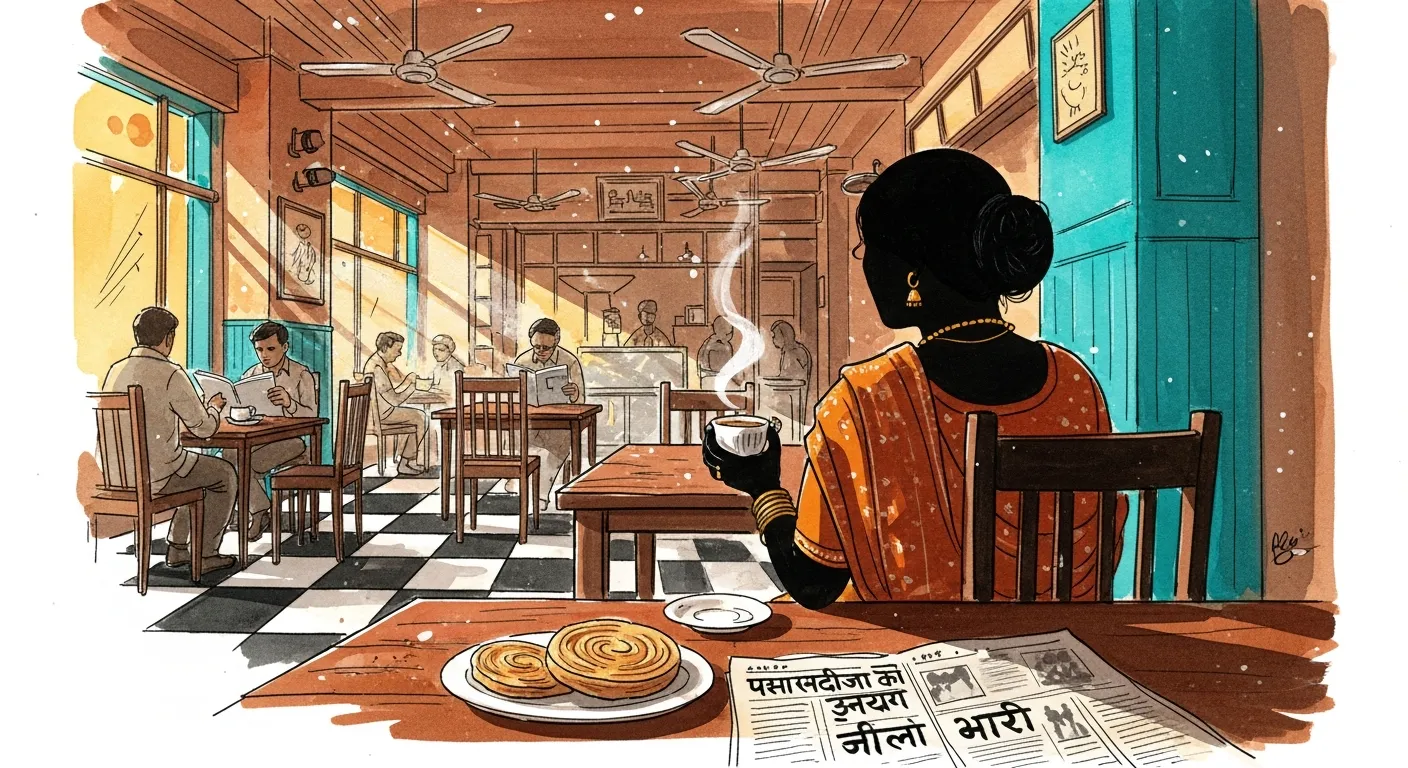
Generated by Imagen 4
In 1981, a woman in Mumbai walked into a restaurant called Chopsticks and was handed the wrong job. She had trained as a chef. The kitchen was full. The bar was empty. Somebody, somewhere in the management hierarchy, made a decision that was not really a decision because nobody at that table thought it was important. Put her behind the bar. She can pour. Let her pour.
Her name was Shatbhi Basu. She was twenty-two years old. She did not know it that afternoon, but she had just become India's first woman bartender. Not the first to drink in public. Not the first to own a bar. The first to stand on the working side of the counter, in a country that did not yet have a word for what she was doing, and make a drink for a stranger.
This is the part nobody talks about. The contemporary Mumbai bar, the one you walked into last weekend with its tamarind tinctures and its kokum spritzes and its bartender who knows your name, has a mother. She is still alive. She is still teaching.
THE ACCIDENTAL CAREER
The 1981 Bombay bar was not a place a woman went to work. It was barely a place a woman went to drink. The Bombay Prohibition Act of 1949 had spent three decades shaping the city's drinking culture into something fluorescent, sweaty, and almost entirely male. The permit room was the architecture. The hotel bar was the alternative. The cocktail, when it appeared, was poured by a man in a waistcoat who had learned the recipe from a 1962 manual nobody had updated since.
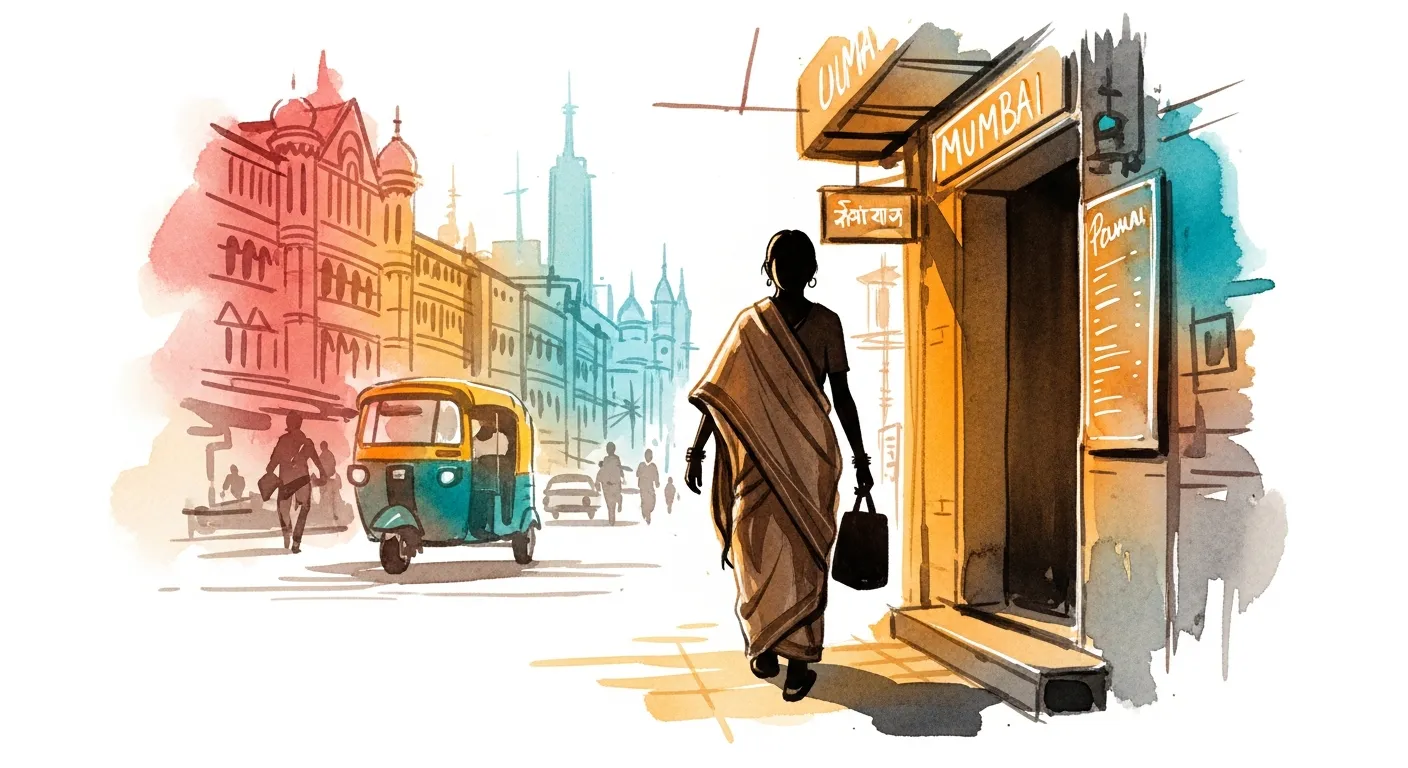
Shatbhi had no manual. She had a bar, a few bottles, and the slow, accumulating realisation that nobody was going to teach her because nobody knew she needed teaching. She read. She tasted. She poured for a clientele that, by her own account to YourStory, sometimes refused to be served by her and sometimes proposed to her over the second drink. Both reactions came from the same place. Neither of them was about the drink.
She stayed.
She stayed. The drink got better. The country took its time.
THE SCHOOL SHE BUILT BECAUSE NOBODY ELSE HAD
For most of the next two decades, the Indian bartender was a category that did not exist on paper. There was no certification. There was no curriculum. The hotel schools taught food and beverage as a single hyphenated subject, and the beverage half was mostly about wine service for guests who were not really drinking wine. Shatbhi spent those years moving between consultancies, training programs, and the slow work of making a profession visible to the people inside it.
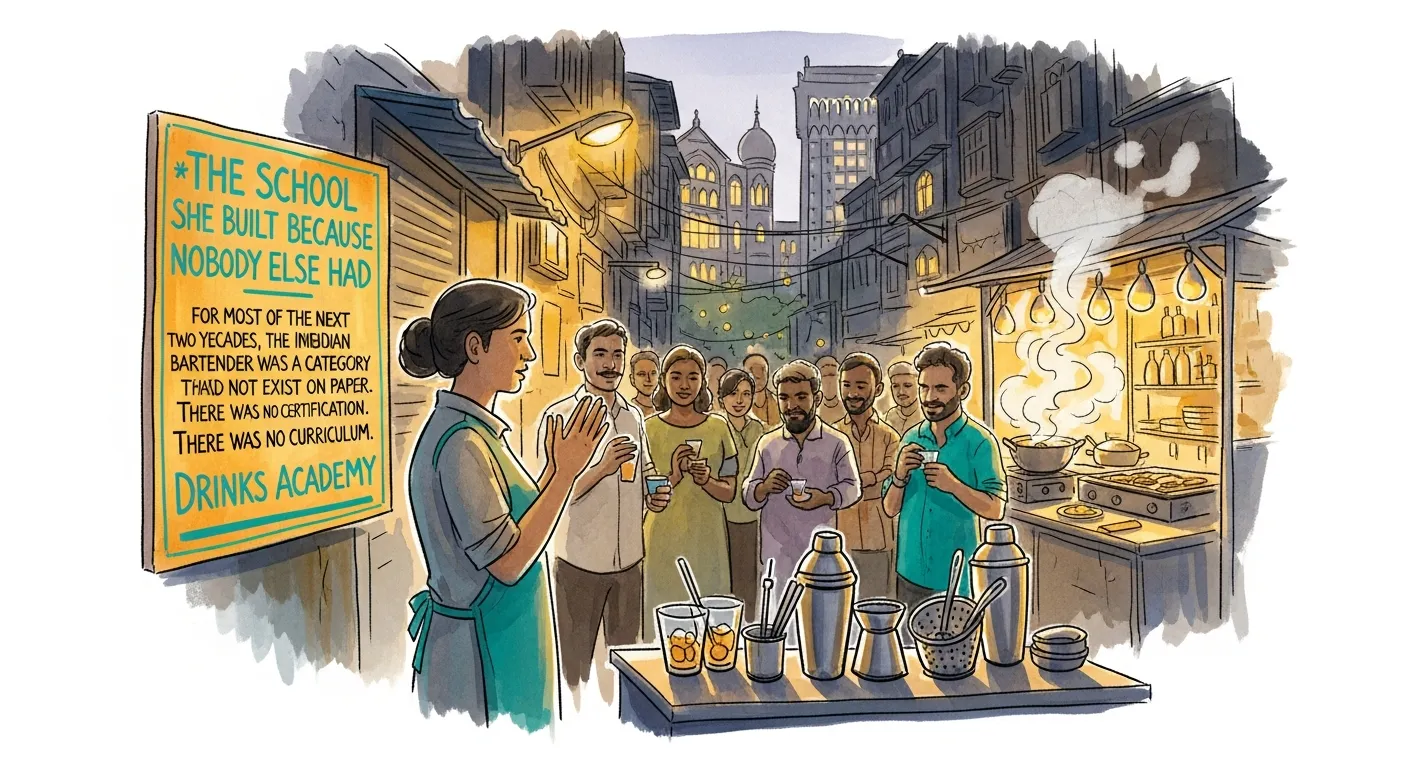
In 2002, she founded STIR Academy of Bartending, the first of its kind in India. The point was not to teach people to pour. The point was to teach them that pouring was a profession with a history, a vocabulary, a set of arguments worth having. Spirit, sugar, water, bitters. The four ingredients of the modern cocktail, first defined in print in 1806. She taught them like grammar.
The students who came out of STIR are now behind the counters of bars you have been to. The drink in your hand last Friday has her fingerprints on it, even if the bartender is too young to know.
THE BAR THAT STARTED LISTENING
Somewhere around 2015, the Mumbai bar stopped being a place that served drinks and started being a place that listened. Feruzan Bilimoria, one of the city's senior bartenders, told Hindustan Times what every bartender in this city will tell you off the record. The job changed. The pour is now thirty percent of it. The other seventy is conversation, observation, and a kind of low-grade emotional triage that nobody trained anyone to do.
The biggest shift, she noted, is the woman drinking alone. In 1981, a woman alone at a bar in Mumbai was a problem to be solved by the management. In 2025, she is the bar's most loyal regular. She knows what she wants. She does not need to be impressed. She asks the bartender what is new this week and listens to the answer.
This is what forty-four years of slow change looks like. Not a revolution. A regular.
THE SPEAKEASY AND THE CINEMA
The rooms have changed too. Alcohol Professor noted in March 2025 that India's speakeasy moment had arrived properly, with Mumbai leading. PCO Mumbai and Ocho are not hidden because hiding is fashionable. They are hidden because the conversation inside them requires a smaller room. The drink is not the point. The drink is the permission to sit down.
In early 2026, Outlook Traveller wrote about Fielia, a new bar in the city built around the idea of Cocktail Cinema. Each drink comes with a story, a lighting cue, a visual. The room is invite-only. The point is mood, not throughput. Bare, another opening, is a hybrid art and cocktail space. The architecture has caught up to what the bartenders have been doing for years.
The through-line, if you trace it backwards, runs through Shatbhi Basu's bar at Chopsticks in 1981. She was, without knowing it, building the first version of what these rooms are now. A bar as a place to be listened to. A bartender as a person who knows what you need before you order it.
WHAT THE CLUB STILL TELLS YOU
Not every room has caught up. A sober patron in a Khar West club wrote on Reddit, sometime in late 2023, about watching the dance floor for two hours. The men did not dance. They stood at the edges, drinks in hand, waiting. The women danced. The room shifted only when the DJ played a Bollywood track everyone in the room had heard at a wedding. Then the men moved. Then the floor filled.
This is the other Mumbai bar. The one that has not yet figured out what the speakeasy has. The one where the music is the permission structure and the conversation is something that happens in the smoking area or not at all.
Both rooms are this city. Both are full on a Saturday.
THE LONG POUR
Shatbhi Basu is sixty-six years old in 2025. She is still teaching. The bartenders coming out of STIR this year were born after she had already been pouring for twenty-three years. Some of them are women. Most of them did not have to walk into a room in 1981 and figure out, alone, with no map, what the job was.
The drink in your hand tonight has a bibliography. The first entry is a twenty-two-year-old who was given the wrong job and decided to keep it.
The drink in your hand tonight, the one with the curry leaf tincture and the gondhoraj rim, has a bibliography. The first entry is a twenty-two-year-old at Chopsticks who was given the wrong job and decided to keep it.
She stayed. The country, eventually, came around.
Field Notes
Quick reference1981. No certification, no curriculum, no word for what she was doing. Shatbhi Basu invented the job by doing it.
Chopsticks, Mumbai. The kitchen was full. The bar was empty. That was the whole decision.
Founded 2002. India's first dedicated bartending school. Every serious bartender in this city has a line back to it.
Spirit, sugar, water, bitters. Four ingredients. First defined in print in 1806. Shatbhi taught them like grammar.
Mumbai's speakeasy wave landed properly in 2025. PCO Mumbai, Ocho, Fielia, Bare. The architecture finally caught up to the bartenders.
Get the next story first
Join the Bhukkads. Free, no spam, just stories.
Takes 30 seconds.