The Galli That Fries For a Living
Edible oil doubled. Ghatkopar's vada pav men did the math. Then they did it again.
Unsplash
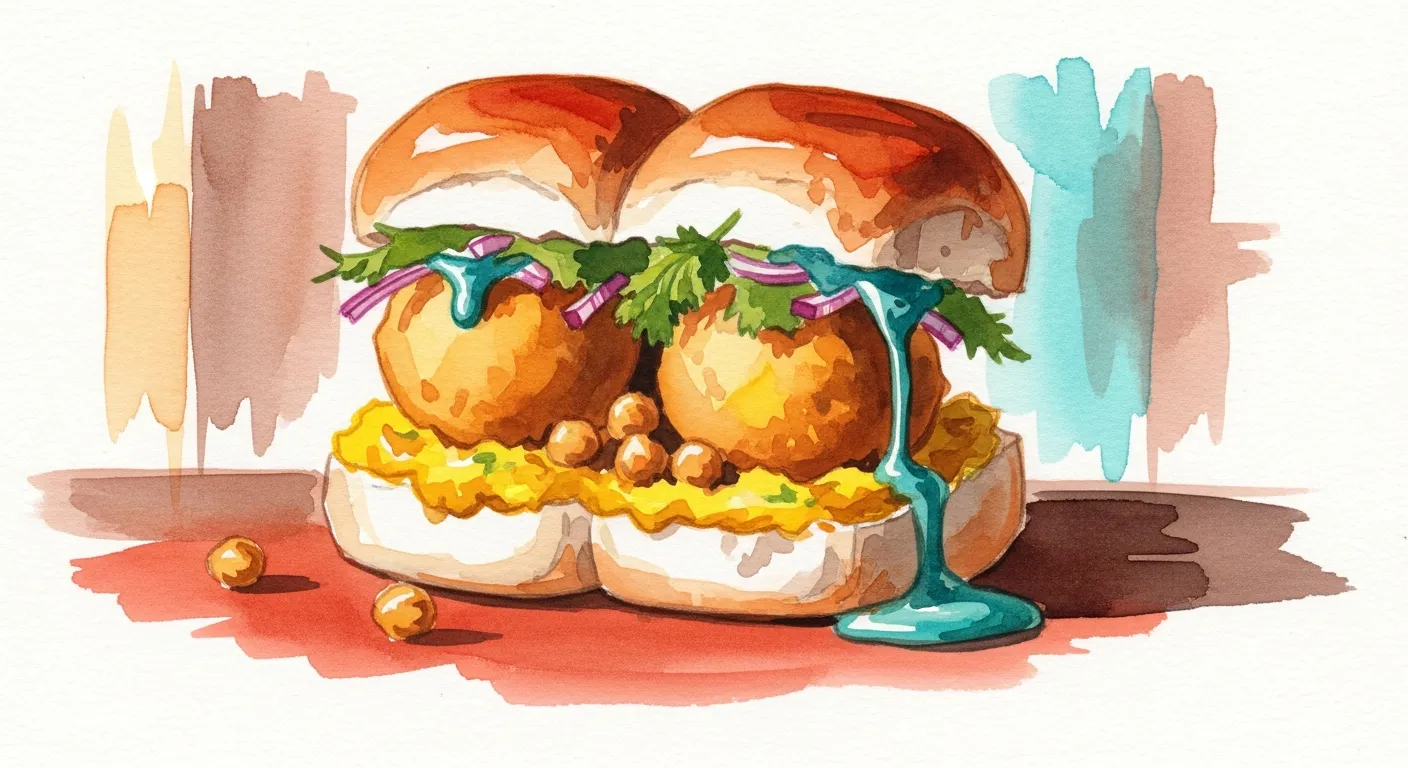
In 1972, a man named Ashok Vaidya set up a wooden cart outside Dadar station and started frying potato in chickpea batter. He was not inventing anything. The batata vada had existed in Maharashtrian kitchens for generations. The pav had been a Portuguese import for centuries. Ashok's contribution was the verb. He put one inside the other and handed it to a mill worker who had eleven minutes between shifts.
Fifty-four years later, the mill workers are gone. The mills are gone. The vada pav stayed. It outlived the city that produced it.
And now the cooking oil costs more than the potato, the flour, the chilli, the chutney, and the pav combined.
THE MATH NOBODY WANTS TO DO OUT LOUD
In Ghatkopar's Khau Galli, a stretch of fried-and-stuffed snacking that draws the office crowd off the main road, the working unit of measurement is the 15-litre tin. One tin gets a busy vada pav stall through a day, maybe a day and a half if the rains are bad and the office crowd is thin. That tin, according to Mumbai Mirror's reporting, used to cost between Rs 1,900 and Rs 2,050 for a business buyer.
It now costs between Rs 2,480 and Rs 2,740. In retail, it has touched Rs 3,254.
That is not inflation. That is a renovation of the entire business model.
Refined edible oil inflation in India has more than doubled in four months, with branded cooking oils now retailing between Rs 110 and Rs 207 per litre, depending on whether you are buying sunflower, soybean, or the palm blend that most stalls actually use. India imports roughly 60 percent of its edible oil. When the Black Sea gets nervous, when Malaysia tightens export quotas, when the rupee moves three paise, a man frying bhajiyas in Ghatkopar finds out about it on Tuesday morning.
The vada is eight rupees of potato wrapped in two rupees of flour fried in twelve rupees of oil. The customer pays fifteen.
THE GALLI BEFORE IT HAD A NAME
Khau Galli was not built. It accumulated.
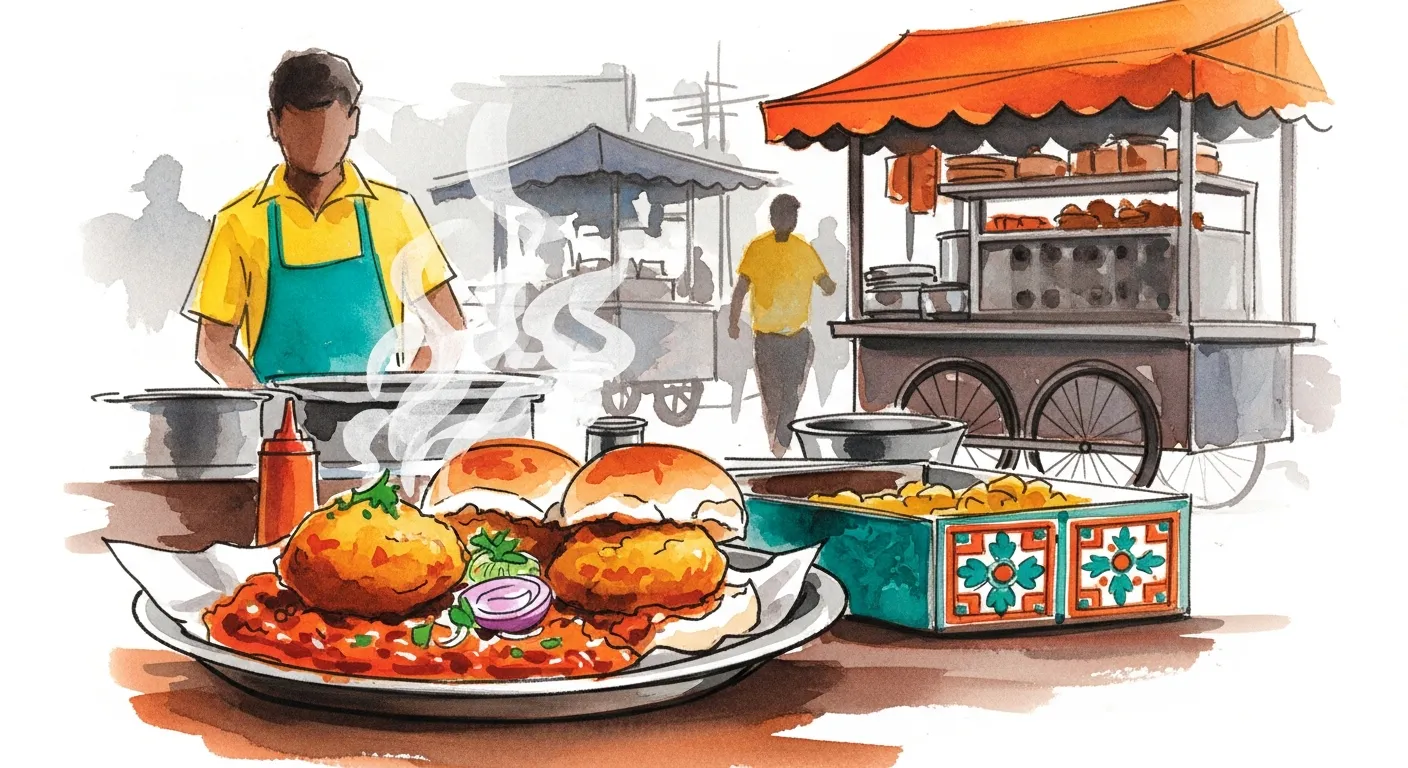
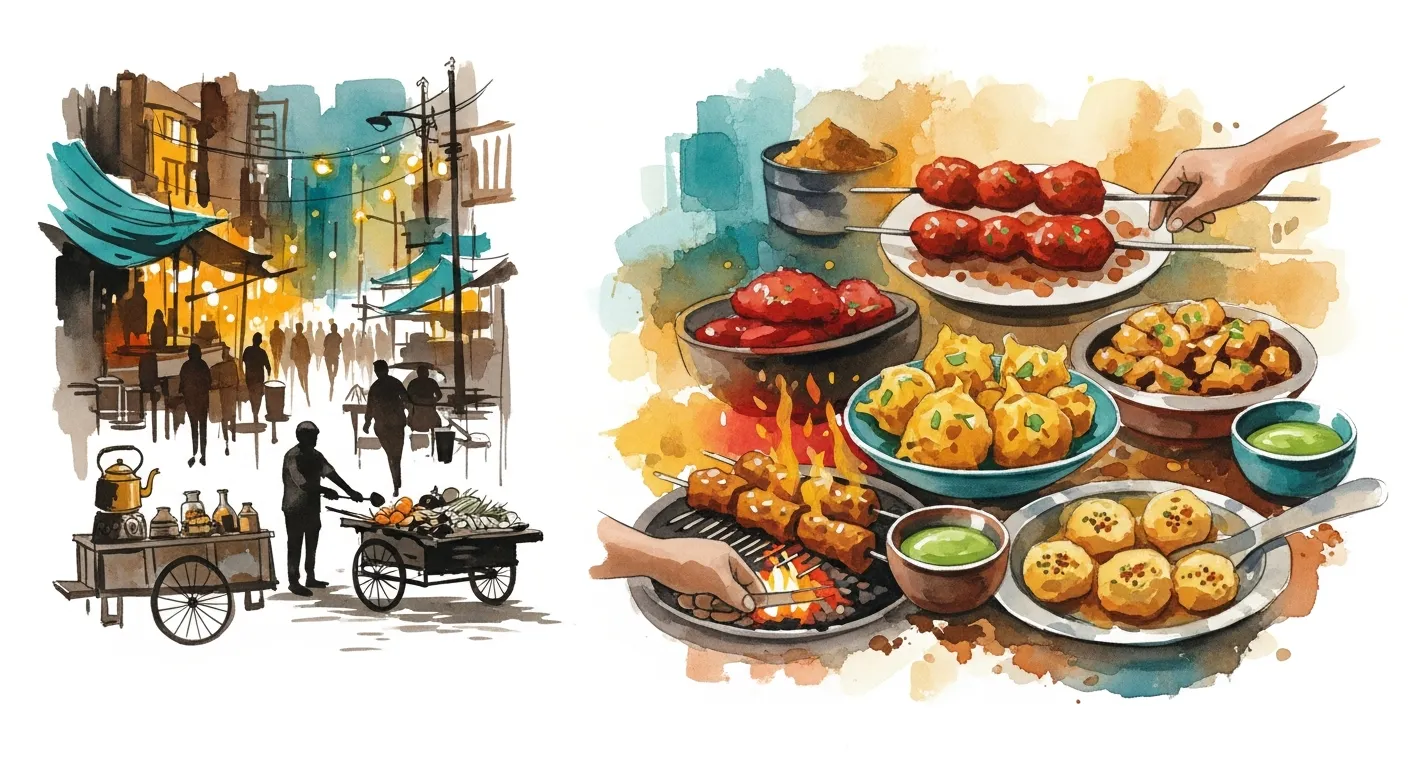
Ghatkopar in the 1970s was a Gujarati and Marwari residential pocket with a station, a market, and a small commercial spine. The first carts came for the office crowd, then for the schoolchildren, then for the families who walked down after dinner because the television had only one channel and walking was free. By the 1990s the lane had a personality. By the 2010s it had an Instagram account.
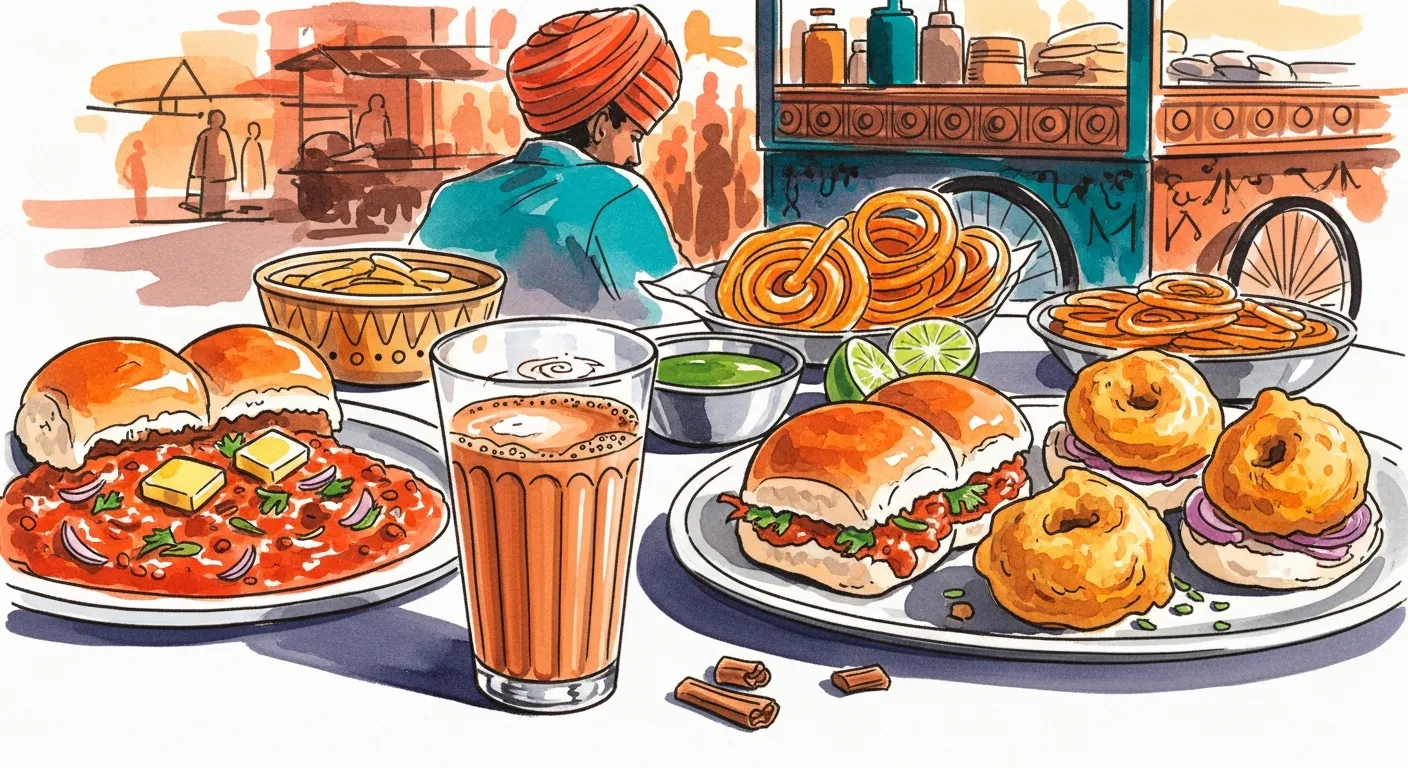
The defining dishes settled into place over thirty years. Bhajiya cones, the paper-rolled fistful of mirchi and kanda and methi pakoda that you ate while walking. Pav bhaji glistening on a tawa the size of a manhole cover. Vada pav, the workhorse, the eight-rupee meal that anchored the entire economic logic of the place. Pani puri at the corners. Sandwich stalls that learned to deep-fry the sandwich because the customer asked them to.
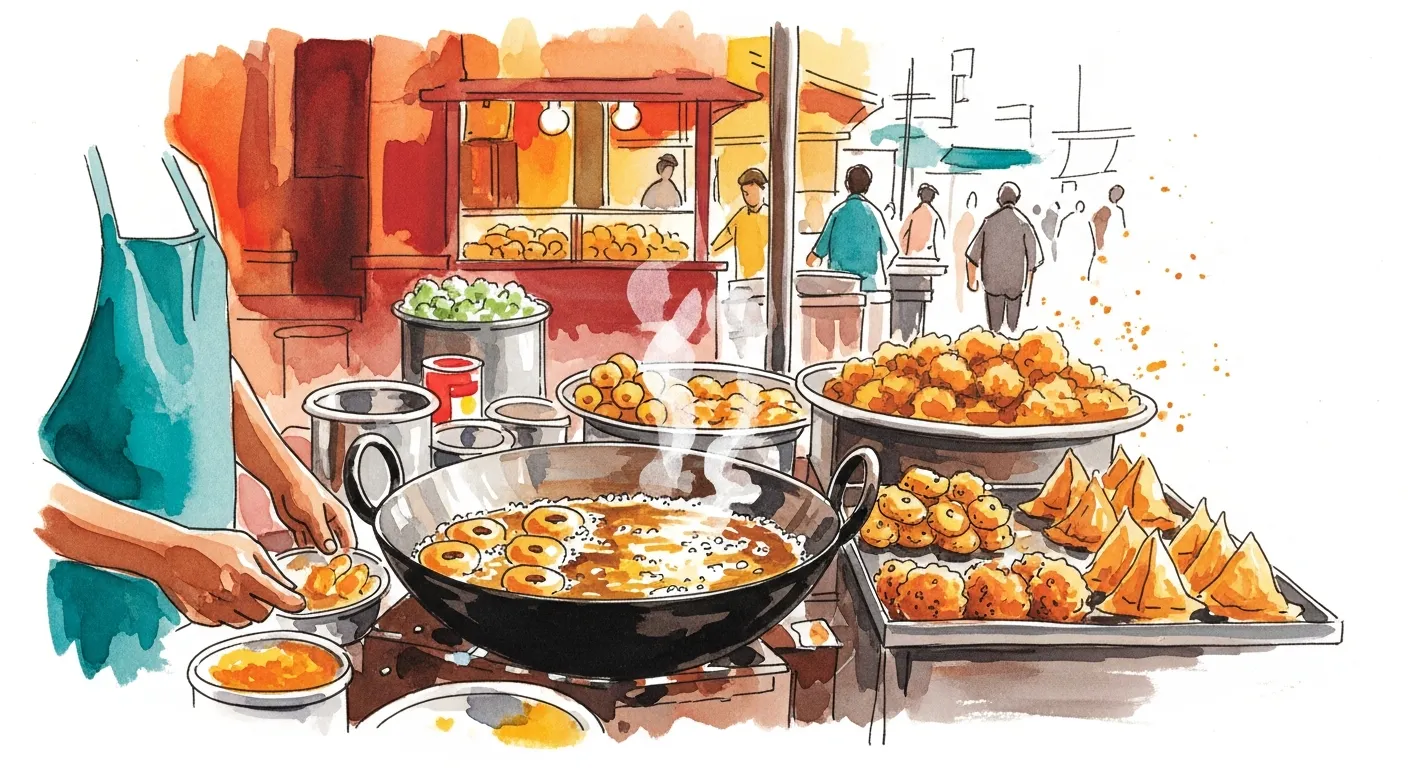
Everything in Khau Galli is fried, dunked in something fried, or served alongside something fried. That is not a culinary choice. That is the architecture of the place. The galli is a deep-fryer with a pin code.
THE 68 PERCENT
Here is the part nobody on the lane wants to talk about. The customer changed.
A 2026 survey cited by Bombay Chaat & Paan found that 68 percent of urban Indians now consider nutritional value when choosing street food. Five years ago, that number was 23 percent. In five years, the share of customers who pause before ordering a vada pav, who ask what oil it is fried in, who pick the steamed dhokla over the kanda bhajiya, has tripled.
The Khau Galli vendor is not reading these surveys. He does not need to. He can see it at six in the evening when the office crowd walks past his cart and stops at the sprouts-and-corn chaat stall two doors down. He can see it when the regular who used to order three vada pavs now orders one and a bottle of water. He can see it when the new stalls open with names like Green Bowl and Steam & Spice and a menu that reads like an apology for the lane it is standing in.
The cart that fried for fifty years is now sharing the footpath with a quinoa bhel. Both of them are paying the same rent.
THE THREE PRESSURES, STACKED
The vendors of Khau Galli are absorbing three different shocks at the same time, and they do not arrive politely, one after the other.
First, the oil. A stall using one 15-litre tin a day is now paying roughly Rs 600 to Rs 700 more for the same tin than it was eighteen months ago. Over a month, that is Rs 18,000 to Rs 21,000 of margin that has simply walked out of the till. For a vada pav stall doing 400 pieces a day at Rs 15 each, that is the difference between profit and the slow conversation with the landlord.
Second, the customer. The young office worker who funded the lane for a decade now carries a stainless steel bottle, reads ingredient lists, and has opinions about seed oils. He still buys vada pav. But he buys one, not three. And he buys it on Friday, not Tuesday.
Third, the rules. FSSAI and the BMC have moved against newspaper packaging, the cheapest serving material on the lane, citing ink contamination risks. Food-grade paper costs three to four times more. The same regulatory push is producing Healthy and Hygienic Food Streets, a Mumbai initiative to upgrade vendor training, hygiene standards, and the visual grammar of the street food stall itself. The lane is being asked to look like something it has never had to look like.
WHAT VENDORS ARE ACTUALLY DOING
The adaptation, where it is happening, is not loud.
Some stalls have switched from sunflower or refined soybean to cheaper palmolein blends, which is the inverse of the health conversation but the only response that makes arithmetic sense. Some have raised prices by two rupees and held their breath. Some have shrunk the vada by five grams, the bhajiya cone by a fistful, the sandwich by half a slice. The pav has not shrunk, because the pav comes from a bakery and the bakery is having its own conversation with wheat.
A smaller group is doing the harder thing. They are adding a steamed item. Dhokla on the side. A baked samosa, which is an oxymoron the lane is learning to pronounce. One pav bhaji vendor has started offering a half-butter version, which sounds like nothing until you realise the full-butter version is the entire point of pav bhaji and removing half of it is a confession.
The lane is not abandoning the fry. It is hedging.
THE THING THAT DOES NOT CHANGE
The vada pav was never really about the vada. It was about the eleven minutes between shifts. It was about a hot meal that cost less than a bus ticket. It was about a city that needed to feed itself standing up, on the move, with one hand free for a bag and the other for the railing.
The shifts are gone. The mills are gone. The eleven minutes have become a forty-minute commute on an air-conditioned line. But the lane is still there, still frying, still wrapping eight rupees of potato in two rupees of batter and handing it to a customer who is now, statistically, more likely to ask what kind of oil it is.
The oil will keep rising. The customer will keep changing. The rules will keep tightening. Some carts will close. Some will adapt. A few new ones will open with steamers instead of kadhais and last six months before the rent quietly removes them.
And somewhere in the middle of all of it, at six in the evening when the trains empty out and the lane fills up, a man at a corner stall will lift a vada out of bubbling oil with a slotted spoon, slap it into a pav, hand it to a stranger, and take fifteen rupees in return.
He has been doing the math all day. He is doing it again.
Field Notes
Quick referenceA 15-litre tin of edible oil that cost Rs 2,050 now costs Rs 2,740. That Rs 690 difference, every single day, is the new rent.
68 percent of urban Indians now consider nutritional value when choosing street food. Five years ago, that number was 23 percent.
Ashok Vaidya, 1972, a wooden cart outside Dadar station. He did not invent the batata vada or the pav. He invented the verb.
India imports roughly 60 percent of its edible oil. A price movement in Malaysia or the Black Sea reaches a Ghatkopar bhajiya stall by Tuesday morning.
FSSAI and BMC moved against newspaper wrapping for vada pav. Food-grade paper costs three to four times more. The cheapest thing on the menu now comes in the most expensive wrapper.
Get the next story first
Join the Bhukkads. Free, no spam, just stories.
Takes 30 seconds.